One Health: A Broader Vision for Global Health
The idea, known as “One Health,” first became popular in the early 2000s. At that time, it mainly focused on diseases that spread between animals and humans. But after the COVID-19 pandemic, experts say the concept needs to be broader and stronger.
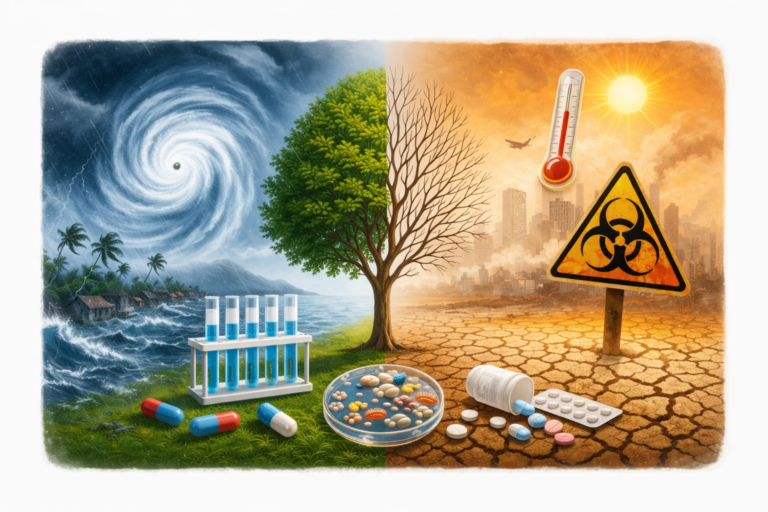
The Lancet One Health Commission explains that health is not only about hospitals and medicines. It is also about climate change, pollution, biodiversity loss, and how we produce food. These global problems are now happening at the same time and affecting each other. Scientists call this the “triple planetary crisis.” According to the report, solving health problems requires action on the environment as well.
One major recommendation is to improve disease monitoring systems. Countries should connect information from hospitals, farms, wildlife, and environmental agencies. This would help detect new outbreaks earlier and understand why they happen. Better data could help prevent crises instead of simply reacting to them. The Commission also highlights antimicrobial resistance (AMR), which happens when bacteria no longer respond to medicines. AMR is becoming a serious threat worldwide. Fighting it requires careful use of antibiotics, stronger infection control, vaccination, and attention to environmental pollution.
Importantly, the report says One Health should not focus only on infectious diseases. Non-communicable diseases such as heart disease and cancer are also linked to environmental factors like air pollution and unhealthy food systems. This means health experts, farmers, environmental scientists, and policymakers must work together.
Food systems are another key issue. Safe and nutritious food depends on clean water, healthy animals, responsible farming, and proper waste management. The Commission calls for reforms that make food production fairer and more sustainable. At the same time, new research warns that climate change may be making antimicrobial resistance worse, especially in the Western Pacific region. Rising temperatures and heavy rainfall can help bacteria grow faster. Extreme weather events, such as floods and storms, can damage healthcare systems and lead to misuse of antibiotics.
Researchers claim many countries still lack strong monitoring systems to track resistance patterns. They suggest creating a regional network that combines health data with climate and environmental information.
Ref: Lancet. 2025 Aug 2;406(10502):501-570. doi: 10.1016/S0140-6736(25)00627-0.